Calculate dive weight for you and a buddy
The dive weight calculator estimates the lead you carry from body weight, exposure suit, tank, water type and build. Fill in Diver A and Diver B to compare two divers side by side: handy for dive buddies, couples, or a guide planning a group with different suits and tanks.
Dive weight and body weight
Heavier divers usually need more lead, but the relationship is weak: your suit and your tank change the answer by more than a few kilograms. A lean 62 kg diver in a 3 mm suit with a steel tank may need much less than an 80 kg diver in 5 mm neoprene with an aluminum 80, which is what the default values above show.
What dive weight does
Dive weight (also called scuba weights or divers weights) cancels the lift of your body, suit and gear so that you can descend and hold a safety stop at 3 to 5 m (10 to 15 ft) at the end of the dive. Carry too little and you struggle to descend or hold a stop; carry too much and you burn air and need extra air in the BCD. See the full scuba weight calculator for the factors in detail, then run a buoyancy check.
Example
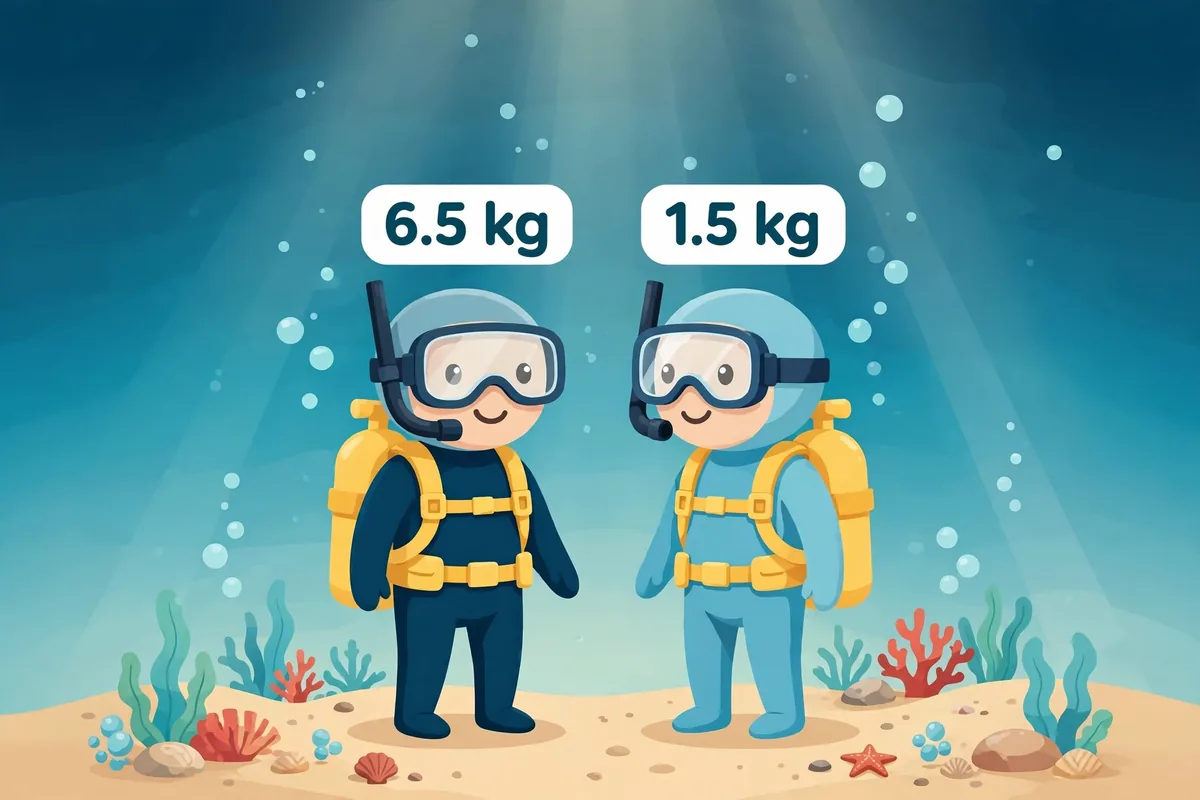
Defaults above: Diver A (80 kg, 5 mm, aluminum 80, saltwater) comes out at 6.5 kg (14.5 lb). Diver B (62 kg, 3 mm, HP100 steel) comes out at 1.5 kg (3.5 lb).
Common questions
Can two buddies use the same weights?
Not always. Each diver weights for their own body, suit and tank, so buddies in different setups usually carry different amounts.
How do I calculate dive weight for a group?
Run each diver through the calculator, then have everyone do their own buoyancy check before the first dive.
Does the calculator work for any wetsuit?
It covers the common suit types. Hoods, vests, thick gloves and boots add lift, so re-check after adding them.